
Romania is updating how foreign workers enter its labour market, with a greater focus on digital applications, employer verification, transparent employment contracts, and worker protection. For international candidates, including Pakistani workers exploring jobs in Europe, understanding the work visa system is essential before accepting a job offer or paying recruitment-related expenses. Candidates and employers seeking recruitment support can explore manpower recruitment services for Romania to learn more about overseas hiring assistance.
In 2026, Romania introduced a new framework for employing foreign nationals, including the D/AM1 and D/AM2 employment visa categories. The government’s WorkinRomania.gov.ro platform was designed to bring important recruitment and work authorization procedures into a digital process. However, requirements differ according to the worker’s qualifications, occupation, and employment arrangement.
The implementation of the new framework has also faced legal and administrative developments. Therefore, candidates and employers should check the current status of their specific application route instead of assuming that every procedure is available.
Understanding Romania’s New Work Visa System
Romania’s updated framework aims to make foreign recruitment more transparent and improve coordination between employers, recruitment agencies, and government authorities. Rather than treating a work visa as an isolated application, the system connects employment offers, employer eligibility, worker information, and relevant contracts.
What Is the WorkinRomania.gov.ro Platform?
WorkinRomania.gov.ro is Romania’s digital platform for managing key procedures related to hiring foreign workers. It was introduced to reduce administrative complexity and give authorities better oversight of employers, placement agencies, and applications.
The platform is designed to support employer registration or authorization, submission of employment information, and the processing of relevant applications. It also aims to improve transparency around salary arrangements, working conditions, accommodation, and worker rights. Understanding global recruitment processes can help employers appreciate the importance of candidate screening, documentation, and coordination in international hiring.
For candidates, digital processing does not mean they can independently apply for any employment visa without a Romanian job offer. The employer or an authorized placement agency generally initiates the relevant procedure, depending on the worker’s category.
The Two Main Employment Visa Categories
The new framework identifies two main employment visa routes.
D/AM1 visa: This route is intended primarily for highly qualified foreign workers recruited for eligible vacancies requiring at least six months of employment. Examples may include IT specialists, engineers, economists, and managers. Certain other professional, academic, cultural, and sporting categories may also qualify under applicable rules.
D/AM2 visa: This route covers specified categories of workers who do not qualify for D/AM1, including permanent and seasonal workers and certain cross-border workers. Job-specific requirements may apply, and the occupation must meet the applicable eligibility conditions.
The correct category depends on the job, the worker’s qualifications, and the legal requirements in force. Candidates should not assume that a particular route is available simply because a Romanian employer has advertised a vacancy. Understanding overseas recruitment procedures can help candidates learn about the recruitment process before pursuing international employment opportunities.
D/AM1 vs D/AM2: Key Differences
| Feature | D/AM1 | D/AM2 |
|---|---|---|
| Main purpose | Highly qualified employment and specified eligible categories | Specified permanent, seasonal, and other eligible employment |
| Typical candidates | Engineers, IT specialists, managers, and other eligible professionals | Eligible workers in occupations such as construction, hospitality, and other sectors, subject to the rules |
| Application route | Submitted by the eligible Romanian employer | Generally involves an authorized placement agency, subject to applicable exceptions |
| Job eligibility | Must meet the relevant D/AM1 criteria | Occupation and other conditions must meet the applicable rules. |
| After visa approval | Enter Romania and complete required residence formalities. | Enter Romania and complete required residence formalities. |
These categories have different eligibility conditions. Employers and candidates should verify the current official instructions before choosing a route, particularly because legal developments may affect the availability of specific application procedures.
How the New Work Visa Application Process Works
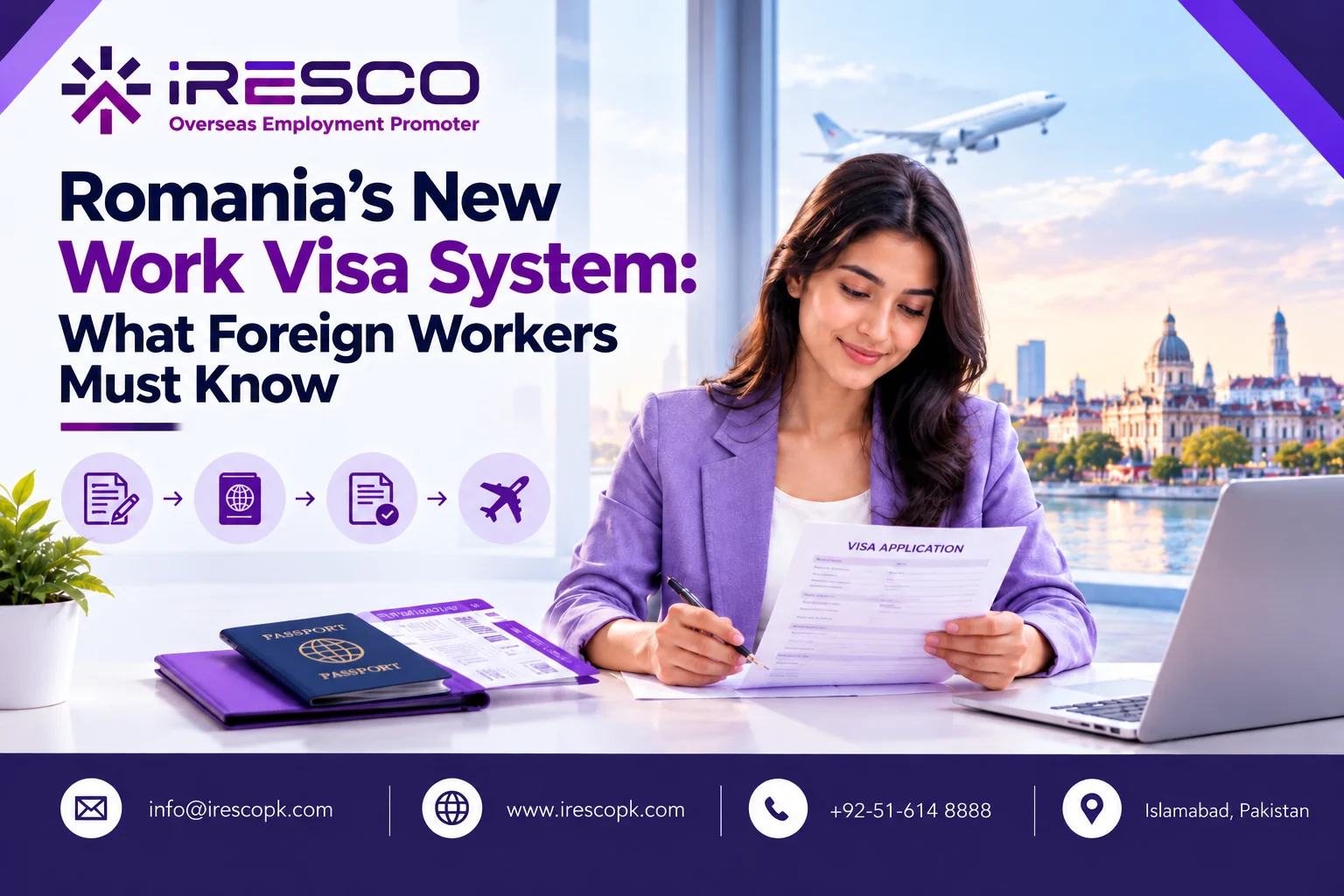
The process generally begins with a genuine job offer from a Romanian employer. The next steps depend on the visa category and the rules currently in operation.
Step One: Find a Genuine Job Offer
Candidates should identify a real vacancy with clear employment terms. Before proceeding, they should understand the job title, duties, required qualifications, salary, working hours, contract duration, and workplace location.
A verbal promise or an informal message is not a substitute for a properly documented job offer. Applicants should verify the employer’s identity and confirm that the vacancy matches their experience and qualifications. They can browse current overseas jobs to begin exploring international employment opportunities while independently checking the legitimacy and suitability of each offer.
Step Two: Employer or Agency Submits the Required Application
Under the intended digital process, the employer or authorized placement agency submits the relevant information through WorkinRomania.gov.ro, depending on the worker’s category.
The application may include the employer’s details, worker identification information, qualifications, job responsibilities, offered salary, contract duration, working schedule, and relevant accommodation or insurance arrangements. Authorities review the information to determine whether legal requirements have been met. Understanding the overseas recruitment process can help candidates and employers prepare for the steps involved in international hiring.
Important current-status warning: Romania’s official platform has reported that, following a court decision affecting the 2026 shortage-occupation list, the D/AM2 application and related employer registration or authorization workflows were deactivated. Employers and applicants should confirm the latest official instructions before relying on the standard D/AM2 process.
Step Three: Authorities Review the Application
The authorities may examine the employer’s legal status, the proposed employment conditions, the worker’s eligibility, and compliance with applicable requirements.
An application can be approved or rejected with reasons. Submitting documents does not guarantee approval, and an employer or agency cannot legitimately promise a government decision in advance.
Step Four: Apply for the Work Visa
Where the required application is approved and the route is available, the worker follows the instructions provided by the relevant Romanian embassy or consulate. Applicants should prepare their travel documents and other required evidence and attend any appointment specified by the diplomatic mission.
Visa application requirements should be confirmed directly with the relevant Romanian consular authority. Documents, appointment procedures, and processing arrangements may vary according to the applicant’s location and circumstances. Candidates can also learn about overseas employment opportunities to better understand the broader process of pursuing jobs abroad.
Step Five: Enter Romania and Complete Residence Formalities
After the appropriate employment visa is issued, the worker may travel to Romania in accordance with its validity and conditions. Workers intending to stay beyond the permitted initial period generally need to complete the applicable residence formalities with Romania’s General Inspectorate for Immigration.
Required documents may include a passport, employment documents, evidence of accommodation, health insurance, and fee-payment records, depending on the case. Workers should apply within the required timeframe and avoid allowing their visa or lawful stay to expire while waiting to complete the process. For broader guidance on international hiring and deployment procedures, explore IRESCO’s international recruitment services.
Documents Foreign Workers May Need
The precise document checklist depends on the employment category, visa application, and instructions issued by the competent authorities. Preparing documents early can help candidates avoid preventable delays.
Commonly relevant documents may include:
- A valid passport and identity information.
- A genuine job offer and individual employment contract.
- Educational certificates, professional qualifications, or evidence of experience, where required.
- Visa application forms and photographs, if specified.
- Supporting documents requested by the Romanian embassy or consulate.
- Evidence of accommodation or health insurance, where applicable.
- Proof of payment of the required official fees.
Candidates should make sure their personal details are consistent across their passport, employment contract, qualifications, and application forms. If translations, authentication, or additional certificates are required, they should follow the instructions of the relevant authority.
Applicants should avoid preparing their case solely from an online checklist that may be outdated or intended for a different visa category.
Employer Responsibilities Under the New Framework
Romanian employers play a central role in the employment authorization process. They must provide accurate information and comply with the conditions applicable to hiring foreign nationals.
A firm job offer should clearly identify the position, responsibilities, salary, work schedule, contract duration, and location. Employers should also explain relevant working conditions and any accommodation or other arrangements they offer.
Recruitment and employment documents should be understandable to the worker. Employers should ensure that candidates receive sufficient information about their contracts and understand the terms before accepting an offer. For further insights, read DITRC’s guide on building trust through ethical recruitment partnerships.
Employers should avoid misleading candidates about visa approval, start dates, deductions, or the possibility of changing jobs. If the position or employment arrangement changes, the parties should check whether notification or additional authorization is required.
What Pakistani Workers Should Know Before Applying
Romania may interest Pakistani candidates looking for opportunities in skilled trades, technical occupations, manufacturing, hospitality, logistics, and professional fields. However, a vacancy in one of these industries does not automatically mean that every applicant qualifies for a Romanian employment visa.
Candidates should first check whether the job is genuine, whether their qualifications match the role, and whether the relevant application route is currently available. They should also confirm the salary, working hours, accommodation arrangements, contract length, and any lawful deductions before agreeing to travel.
Pakistani applicants should be particularly cautious of anyone offering guaranteed visas, promising employment without a proper contract, or demanding unexplained payments. Recruitment agencies’ claims should be verified independently, and all payments should be documented with appropriate receipts. IRESCO explains how candidate screening and verification can help support a more reliable recruitment process.
Before travelling, applicants should know how to contact their employer, where they will live, what their employment contract provides, and which authority to contact if their rights are violated.
Recruitment Agencies and Ethical Hiring
Recruitment agencies can support international hiring by sourcing candidates, arranging interviews, coordinating documentation, and communicating between employers and applicants. Their role must comply with the rules that apply to the specific recruitment and visa route. IRESCO discusses the importance of skilled workforce recruitment for employers seeking suitable candidates.
Employers looking for bulk manpower recruitment services may need structured support with candidate sourcing, preliminary screening, interview scheduling, document collection, and communication across large recruitment campaigns. Every candidate must still be checked individually against the requirements of the job and the applicable authorization route. DITRC explains its approach to candidate screening procedures to help employers evaluate applicants.
Businesses comparing a government approved overseas employment promoter should verify the provider’s current licensing status through the appropriate official channels rather than relying solely on promotional claims. Similarly, anyone searching for an overseas employment promoter in pakistan should check the provider’s credentials, written service agreement, fee arrangements, and responsibilities before proceeding.
Ethical recruitment means giving candidates accurate information about the vacancy, salary, work conditions, and recruitment process. Workers should have a fair opportunity to read their contracts and understand their obligations before accepting an offer.
Employers and recruitment providers should follow best practices for ethical international recruitment, including transparent communication, fair selection criteria, responsible handling of personal information, and clear explanations of employment terms. Transparent hiring helps protect workers and reduces disputes after arrival.
Common Mistakes to Avoid
Foreign workers and employers can reduce delays and misunderstandings by avoiding a few common mistakes.
- Applying under the wrong category: The D/AM1 and D/AM2 routes have different eligibility conditions.
- Trusting unverified job offers: Check the employer and obtain written employment terms.
- Ignoring changes to the rules: Confirm the latest official status of the application route, particularly for D/AM2.
- Submitting inconsistent documents: Ensure names, dates, qualifications, and job details match.
- Paying for guaranteed approval: No private recruiter can guarantee a government visa decision.
- Forgetting residence formalities: Entry on a work visa may be followed by additional requirements for longer-term residence.
Careful preparation is especially important when the recruitment process involves several organizations or a large number of workers.
How to Verify the Latest Romanian Work Visa Rules
Because Romania’s 2026 framework is undergoing implementation and legal developments, candidates should use official sources before making decisions.
The WorkinRomania.gov.ro platform provides information about the foreign worker system, eligibility, and application procedures. The Romanian Ministry of Foreign Affairs and the Romanian embassy or consulate responsible for the applicant’s location can provide the relevant visa instructions. The General Inspectorate for Immigration provides information about residence formalities after arrival.
Applicants should confirm whether their employer or agency can currently submit the relevant application, whether the occupation meets the applicable criteria, which documents are required, and whether any transitional arrangements apply. For additional insights into recruitment compliance, explore this international hiring guide.
This verification is particularly important for applicants planning to pay recruitment fees, resign from an existing job, or book travel. Waiting for confirmation is safer than relying on a recruiter who claims that every part of the process is operating normally.
Conclusion
Romania’s new work visa framework for 2026 introduces the D/AM1 and D/AM2 categories and a digital approach to foreign worker recruitment through WorkinRomania.gov.ro. The system is designed to improve transparency, connect employment offers with official checks, and strengthen worker protection.
However, the process depends on the worker’s category, the employer’s eligibility, and the current status of the relevant application route. Official information has indicated that D/AM2 workflows were deactivated following a court decision affecting the shortage-occupation list, so employers and candidates should confirm the latest position before proceeding.
For Pakistani workers, the safest approach is to verify the employer, understand the written contract, prepare accurate documents, and rely on current official guidance. A genuine job offer, transparent recruitment, and careful compliance checks are essential foundations for pursuing employment in Romania. Employers and candidates can also explore responsible international hiring for broader insights into cross-border recruitment.
Frequently Asked Questions (FAQs)
What are Romania’s new work visa categories in 2026?
The framework identifies D/AM1, primarily for highly qualified workers and certain other eligible categories, and D/AM2 for specified permanent, seasonal, and other eligible workers.
Can Pakistani citizens apply for a Romanian work visa?
Pakistani citizens may be eligible if they have a genuine employment opportunity and meet the relevant visa and employment requirements. Eligibility depends on the job, the applicant’s circumstances, and the route available at the time.
Can workers apply for a Romanian work visa without an employer?
The standard employment process generally requires a Romanian employer and a firm job offer. Depending on the category, the application is submitted by the employer or an authorized placement agency.
Is Romania’s D/AM2 application process currently available?
The official platform has reported that D/AM2 application workflows and related procedures were deactivated following a court decision affecting the shortage-occupation list. Applicants should check the official platform for updated instructions before proceeding.
What happens after a Romanian work visa is issued?
The worker can travel in accordance with the visa’s conditions and must complete any applicable residence formalities if staying beyond the permitted initial period.
How can applicants avoid Romanian work visa scams?
Verify the employer and recruitment agency, obtain a written contract, confirm current requirements through official sources, and avoid anyone promising guaranteed approval or requesting unexplained payments.
