

Global workforce shortages have become one of the biggest challenges facing businesses across industries. From healthcare and construction to manufacturing, hospitality, engineering, logistics, and technology, employers in many countries are struggling to find enough qualified workers to meet growing demand. As economies expand and experienced workers retire, the gap between available jobs and qualified talent continues to widen.
One of the most effective solutions to this challenge is international recruitment. By connecting employers with skilled professionals and workers from international labor markets, companies can access a larger talent pool, fill critical vacancies, and maintain business growth.
For employers facing persistent labor shortages, international talent recruitment provides an opportunity to overcome local workforce limitations while building a more diverse, capable, and flexible workforce. Recruitment agencies such as IRESCO help businesses identify qualified candidates, manage recruitment processes, and support international workforce mobility.
Understanding the Global Workforce Shortage
A global workforce shortage occurs when employers have more job openings than qualified workers available to fill them. Although the causes vary from country to country, several common factors contribute to the growing talent gap.
Population ageing is one major factor. Many developed economies have large numbers of experienced workers approaching retirement, while fewer young workers are entering the labor market. This creates significant shortages in industries that require technical skills, professional qualifications, and practical experience.
At the same time, economic growth is increasing demand for workers. Construction projects, infrastructure development, manufacturing expansion, healthcare services, hospitality businesses, and technology companies all require skilled employees.
However, local education and training systems cannot always produce qualified workers quickly enough to meet employer demand. This creates a skills gap that can affect productivity, project completion, customer service, and business expansion.
Why International Talent Is Becoming Essential
Traditional hiring strategies often focus primarily on local candidates. While local recruitment remains important, it may not provide enough qualified workers when a country or industry experiences a serious labor shortage.
International talent acquisition allows employers to expand their search beyond domestic labor markets. Instead of competing for a limited number of local candidates, companies can access skilled workers from countries with strong talent pools. Countries such as Pakistan, India, Nepal, Bangladesh, and the Philippines have large populations of skilled and semi-skilled workers across multiple industries. International recruitment creates a connection between these available workers and employers experiencing workforce shortages.
For businesses, this can mean faster access to qualified employees, greater workforce flexibility, and improved capacity to meet operational requirements.
How International Recruitment Helps Fill Skills Gaps
One of the biggest advantages of overseas recruitment is its ability to address specific skills shortages.
For example, an employer may struggle to find qualified electricians, welders, nurses, engineers, drivers, technicians, or construction workers locally. Instead of leaving positions vacant for months, the company can work with an experienced international recruitment agency to identify candidates from overseas.
A structured recruitment process can include:
- Workforce requirement analysis
- Candidate sourcing
- CV screening
- Technical assessments
- Interviews
- Skills verification
- Reference checks
- Documentation
- Visa and work permit support
- Medical and compliance requirements
- Mobilization and travel coordination
This approach allows employers to recruit according to actual workforce requirements rather than limiting hiring to the candidates available within one geographic market.
International Talent and the Construction Industry
Construction is one of the industries most affected by skilled labor shortages. Large infrastructure developments, residential projects, commercial buildings, transportation networks, and energy projects require thousands of workers with specialized skills.
Employers may need:
- Civil engineers
- Electrical engineers
- Mechanical engineers
- Welders
- Plumbers
- Electricians
- HVAC technicians
- Heavy equipment operators
- Surveyors
- Masons
- Carpenters
- General construction workers
International manpower recruitment can help construction companies build project-based teams efficiently. For major developments in the Middle East, international recruitment has become particularly important. Countries investing heavily in infrastructure and economic diversification require significant numbers of skilled workers to support their long-term development plans.
International Recruitment for Healthcare Workforce Shortages
Healthcare is another sector facing significant workforce challenges. Hospitals, clinics, care facilities, and healthcare organizations require qualified professionals to provide essential services.
International healthcare recruitment can help organizations access:
- Doctors
- Nurses
- Medical technicians
- Pharmacists
- Care workers
- Laboratory professionals
- Radiology technicians
- Other healthcare specialists
Because healthcare roles often require specific qualifications and licensing, international recruitment must be handled carefully. Employers need candidates whose qualifications, experience, and professional credentials meet the requirements of the destination country.
A reliable recruitment partner can help employers manage candidate screening and documentation while ensuring that recruitment procedures follow applicable regulations.
Manufacturing and Industrial Workforce Solutions
Manufacturing companies also face growing challenges in finding workers with technical and industrial skills. Automation is changing manufacturing operations, but businesses still need qualified people to operate machinery, maintain equipment, manage production, and oversee quality control.
International recruitment can provide access to workers such as:
- Machine operators
- CNC operators
- Production supervisors
- Mechanical technicians
- Electrical technicians
- Maintenance workers
- Welders
- Quality control professionals
- Industrial engineers
By expanding recruitment internationally, manufacturers can reduce the impact of local labor shortages and maintain production capacity.
The Role of International Talent in the Middle East
The Middle East has become one of the world’s most important destinations for international workers. Countries such as Saudi Arabia, the United Arab Emirates, Qatar, Kuwait, Bahrain, and Oman continue to invest in infrastructure, construction, healthcare, hospitality, energy, manufacturing, and other sectors. This creates strong demand for skilled and experienced international workers.
Saudi Arabia, in particular, is undergoing major economic transformation. Large-scale infrastructure and development projects require a broad range of technical, professional, and operational talent.
For employers, international recruitment in Saudi Arabia can provide access to qualified workers from global talent markets.
A specialized recruitment agency in Saudi Arabia or an international recruitment partner can help employers identify candidates, manage hiring requirements, and coordinate workforce mobilization.
How Recruitment Agencies Support Global Hiring
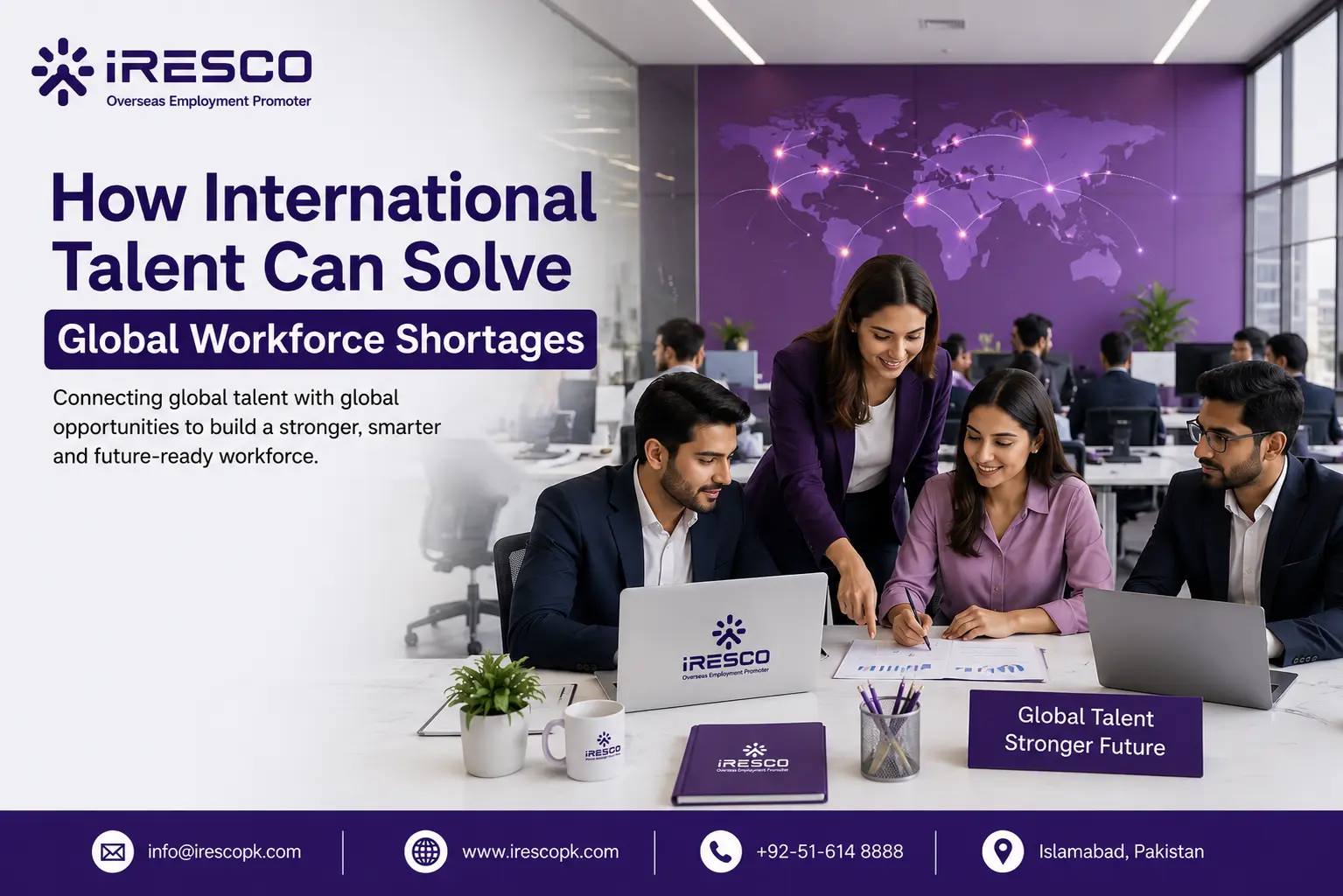
International hiring can be more complicated than domestic recruitment. Employers must often deal with different labor laws, immigration requirements, documentation standards, cultural considerations, and candidate mobility issues.
This is where recruitment agencies can provide significant value.
An experienced manpower recruitment agency can manage multiple stages of the recruitment process, allowing employers to focus on their core business operations.
Recruitment agencies can help with:
Candidate Sourcing
Recruitment specialists identify candidates through databases, professional networks, job portals, recruitment campaigns, and international partnerships.
Candidate Screening
Candidates are evaluated according to their qualifications, experience, skills, and suitability for the employer’s requirements.
Interview Coordination
Recruiters can organize interviews between international candidates and employers, reducing communication and scheduling challenges.
Documentation Support
International employment requires accurate documentation. Recruitment professionals can help coordinate employment contracts, job offers, demand documents, and other required paperwork.
Visa and Work Permit Assistance
Depending on the destination country, workers may require employment visas and work permits. Recruitment partners can assist employers and candidates throughout the relevant process.
Workforce Mobilization
After selection and documentation, international recruitment may also involve medical requirements, travel arrangements, orientation, and employee mobilization.
Benefits of Hiring International Workers
International talent can provide several strategic advantages to employers.
Access to a Larger Talent Pool
The most obvious benefit is access to candidates beyond the local labor market. This is particularly valuable when specific skills are difficult to find domestically.
Faster Workforce Expansion
Businesses can scale their workforce according to project requirements and market demand.
Access to Specialized Skills
International labor markets may offer candidates with experience in specific industries, technologies, or large-scale projects.
Workforce Diversity
Employees from different countries can bring different perspectives, experiences, languages, and approaches to problem-solving.
Support for Business Growth
Having enough qualified employees enables organizations to take on new contracts, expand operations, and complete projects efficiently.
Greater Recruitment Flexibility
International hiring gives employers additional options when local recruitment cannot satisfy workforce requirements.
Overcoming Challenges in International Recruitment
Although international recruitment offers significant advantages, it must be managed professionally. One common challenge is ensuring that candidates possess genuine qualifications and relevant experience. Thorough screening and verification are therefore essential.
Another challenge involves immigration and employment regulations. Requirements can differ significantly between countries, making compliance an important part of the recruitment process. Cultural differences can also affect workplace communication. Employers can reduce these challenges through proper onboarding, orientation, and clear communication.
Finally, international hiring requires careful coordination. From candidate selection to visa processing and travel, multiple steps must be completed correctly.
Working with a reputable recruitment partner can help employers manage these challenges more effectively.
Ethical and Compliant International Recruitment
Solving workforce shortages should not come at the expense of worker rights. Ethical recruitment is an essential component of successful international hiring.
Employers and recruitment agencies should promote:
- Transparent employment terms
- Accurate job descriptions
- Fair recruitment practices
- Proper documentation
- Respect for worker rights
- Compliance with immigration regulations
- Clear salary and benefit information
- Protection against recruitment fraud and exploitation
A transparent recruitment process benefits both employers and workers. Employers receive reliable talent, while workers gain access to legitimate employment opportunities.
How Technology Is Transforming International Talent Acquisition
Technology is making global recruitment faster and more efficient.
Modern recruitment agencies increasingly use digital platforms, applicant tracking systems, automated screening tools, video interviews, and data-driven recruitment processes.
Artificial intelligence can also support candidate matching by comparing candidate profiles with job requirements. However, technology should complement rather than completely replace human expertise.
Recruiters still play an important role in evaluating communication skills, cultural fit, career goals, experience, and other factors that automated systems may not fully understand.
The combination of AI recruitment technology and human expertise can create a more efficient international hiring process.
Why Employers Should Plan International Recruitment Strategically
International recruitment should not be treated as a last-minute solution. Businesses facing recurring labor shortages should develop long-term workforce strategies.
Employers can begin by identifying:
- Which positions are difficult to fill locally.
- Which skills will be required in the next one to three years?
- Which international markets have suitable talent.
- What qualifications and certifications candidates need.
- Which immigration requirements apply.
- How many workers are required.
- What recruitment timeline is realistic.
Strategic workforce planning enables employers to build reliable talent pipelines instead of repeatedly reacting to labor shortages.
How IRESCO Helps Employers Access International Talent
IRESCO supports employers seeking skilled and qualified international workers through structured overseas recruitment and manpower solutions.
As a government-approved Overseas Employment Promoter, IRESCO connects international employers with talent from Pakistan and other recruitment markets.
The company’s recruitment approach focuses on understanding employer requirements, sourcing suitable candidates, screening applicants, coordinating interviews, supporting documentation, and helping facilitate international workforce mobility.
For employers in Saudi Arabia, the UAE, and other international markets, working with an experienced recruitment partner can simplify the process of finding and mobilizing qualified workers.
Whether a business needs individual professionals or bulk manpower recruitment, a structured recruitment strategy can help address workforce shortages while maintaining quality and compliance.
The Future of Global Workforce Mobility
Global workforce mobility is likely to become increasingly important as labor markets continue to change.
Demographic shifts, technological developments, economic growth, and changing worker expectations will continue to influence where businesses find talent.
Countries experiencing labor shortages will increasingly depend on international workers, while countries with large skilled labor populations will play an important role in supplying global talent. This creates opportunities for employers and workers alike.
For businesses, the future of recruitment will involve building international talent pipelines rather than relying exclusively on local hiring.
For workers, international employment can provide opportunities to develop skills, gain global experience, and build international careers.
The organizations that adapt early will be better positioned to compete for talent in an increasingly interconnected labor market.
Conclusion
Global workforce shortages are creating serious challenges for employers across construction, healthcare, manufacturing, engineering, hospitality, logistics, energy, and other industries. When local talent pools cannot meet growing demand, international recruitment provides a practical and scalable solution.
By accessing global talent, businesses can fill critical skills gaps, expand their workforce, support major projects, and improve operational continuity. However, successful overseas hiring requires careful candidate screening, regulatory compliance, documentation, workforce planning, and ethical recruitment practices.
Professional recruitment agencies such as IRESCO can help employers navigate the complexities of international talent acquisition, from candidate sourcing and selection to documentation and workforce mobilization.
As global workforce mobility continues to grow, international talent will become an increasingly important part of solving labor shortages and supporting sustainable business growth.
Frequently Asked Questions (FAQs)
1. How can international talent help solve global workforce shortages?
International talent expands the available labor pool beyond domestic candidates. Employers can recruit qualified professionals and skilled workers from countries with strong talent markets, helping fill positions that are difficult to staff locally.
2. Which industries benefit most from international recruitment?
Construction, healthcare, manufacturing, engineering, hospitality, logistics, oil and gas, facility management, and technology are among the industries that can benefit significantly from international recruitment and workforce solutions.
3. What does an international recruitment agency do?
An international recruitment agency helps employers source, screen, interview, and select candidates from overseas. Depending on the service, the agency may also support documentation, visa processing, work permits, compliance, and workforce mobilization.
4. Is international recruitment suitable for bulk hiring?
Yes. Bulk manpower recruitment is particularly useful for construction projects, manufacturing facilities, hospitality operations, healthcare organizations, and other businesses that need large numbers of workers within a specific timeframe.
5. How can employers ensure ethical international recruitment?
Employers should work with reputable recruitment partners, provide accurate job information, maintain transparent employment terms, verify candidate qualifications, follow immigration and labor regulations, and protect the rights of international workers throughout the recruitment process.
