

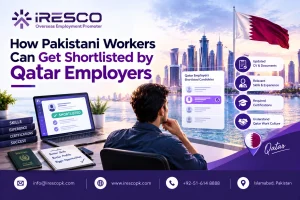
Getting shortlisted by a Qatari employer is an important step toward securing an overseas job. Pakistani candidates often compete with applicants who have similar qualifications, so presenting the right skills, experience, and professional attitude can make a meaningful difference. Working with a reliable recruitment agency of Qatar can help candidates understand employment requirements, prepare their documents, and explore opportunities that match their professional backgrounds. However, getting shortlisted ultimately depends on how well an applicant meets the employer’s requirements and communicates their suitability for the position.
Qatar offers employment opportunities across sectors such as construction, engineering, healthcare, hospitality, transportation, facility management, and information technology. Employers look for candidates who can perform their duties effectively, follow workplace standards, and contribute to business operations. Pakistani workers who prepare carefully before applying can improve their chances of reaching the interview stage and progressing through the recruitment process.
1. Understand What Qatar Employers Expect
Before applying for a position, study the vacancy announcement carefully. Employers usually specify the required qualifications, years of experience, technical abilities, language skills, and other conditions relevant to the role. Your application should demonstrate that you meet these requirements instead of relying on general statements about your capabilities.
For example, an employer recruiting an electrician may require experience with industrial equipment, electrical maintenance, and workplace safety procedures. A hotel seeking front-office staff may prioritize customer service, communication, computer skills, and previous hospitality experience.
Read the job description and identify the essential requirements. If you meet them, make those qualifications visible in your CV and application. If the position requires a certification or a particular type of experience that you do not have, avoid claiming otherwise. Exploring overseas recruitment services can also help you learn more about recruitment support for international employment opportunities.
Understanding the employer’s expectations helps you focus on suitable vacancies and avoid applications that are unlikely to progress.
2. Prepare a Professional CV for Qatar Jobs
Your CV is often the first opportunity to demonstrate your suitability. A poorly organized document can make relevant experience difficult to identify, even when you possess the required skills.
Create a clear, professional CV that highlights your qualifications, employment history, technical abilities, and relevant achievements. Keep the information accurate and use a simple layout that employers can read easily. You can also explore these video CV and resume tips to learn how to present your experience through a video resume.
Your CV should generally include:
-
Contact information: Your full name, active phone number, professional email address, and current location.
-
Professional summary: A brief introduction explaining your occupation, experience, and strongest relevant skills.
-
Employment history: Previous employers, job titles, employment dates, responsibilities, and achievements.
-
Education and certifications: Relevant degrees, diplomas, licenses, and technical training.
-
Technical and language skills: Software knowledge, equipment expertise, communication abilities, and other job-related competencies.
Whenever possible, describe achievements using concrete details. Instead of writing that you performed maintenance duties, explain the equipment you maintained, the type of work you handled, or the responsibilities you managed.
Avoid adding irrelevant information simply to make your CV longer. A focused application makes it easier for recruiters to assess whether you match the vacancy.
3. Match Your Experience to the Advertised Position
One common mistake is sending the same CV for every overseas vacancy. Although your employment history remains the same, the way you present your experience should reflect the requirements of each position.
Review the job advertisement and identify its main responsibilities. Then explain how your previous work demonstrates your ability to handle similar duties.
For instance, a civil engineer applying for a site engineer position should emphasize site supervision, construction documentation, safety compliance, material coordination, and project reporting where these reflect their actual experience.
Similarly, a warehouse supervisor should highlight inventory management, team coordination, stock records, dispatch operations, and workplace safety if these are relevant to the vacancy.
Use terminology from the job description when it accurately describes your skills. This can help recruiters recognize the connection between your background and the role. Understanding how recruiters match candidates with job requirements can also help you present your relevant experience more clearly.
The objective is not to exaggerate your qualifications. It is to make your relevant experience easy to identify during the initial screening process.
4. Develop the Skills Employers Need
Professional qualifications can help you meet basic eligibility requirements, but employers may also assess your practical abilities. A candidate who can explain how they perform specific tasks may be better prepared for technical interviews and practical assessments.
Workers in construction, engineering, and industrial maintenance should review the technical procedures, equipment, safety practices, and tools relevant to their positions. Healthcare professionals should maintain appropriate qualifications and demonstrate familiarity with their professional responsibilities. Hospitality applicants can strengthen their profiles through customer service, communication, and service-related training.
Consider taking relevant courses or obtaining recognized certifications when they improve your suitability for the jobs you are targeting. Make sure the training provider and qualification are appropriate for your occupation and the employer’s requirements. You can also explore IRESCO’s employer and candidate services to learn more about recruitment support for overseas employment.
Language skills also matter. English communication may be important in many international workplaces, while basic Arabic can be useful in certain customer-facing and operational roles. The level required depends on the position.
Focus on developing skills that are directly connected to your intended occupation rather than collecting certificates without a clear purpose.
5. Gain Relevant Experience Before Applying
Employers may prefer candidates who have already performed similar work in a professional environment. Relevant experience helps demonstrate that you understand the responsibilities of the position and can adapt to its working conditions.
If you are an experienced worker, describe your previous duties clearly and provide accurate employment dates. Mention the industries in which you have worked, the equipment or systems you have used, and the responsibilities you handled independently.
Fresh graduates and entry-level applicants can highlight internships, apprenticeships, practical training, and relevant projects. Although these experiences may not replace years of professional employment, they can demonstrate foundational knowledge and willingness to learn.
Prepare supporting documents such as experience certificates, educational records, professional licenses, and training credentials where applicable. Ensure that the information in these documents is consistent with your CV. Learning about candidate screening and experience verification can also help you understand why accurate employment records and relevant qualifications matter during overseas recruitment.
Never invent employment history or submit false certificates. Discrepancies can damage your credibility and may create problems during employer verification or recruitment processing.
6. Work With a Suitable Recruitment Partner
Recruitment professionals can help candidates understand vacancies, submit applications, and prepare for employer interviews. However, candidates should evaluate recruitment services carefully and avoid assuming that every agency offers the same support.
When researching job consultants in Qatar, check whether they have relevant industry knowledge, clear communication practices, and a transparent approach to vacancies and candidate requirements. Ask how applications are processed, what documents are needed, and whether the opportunity is suitable for applicants currently based in Pakistan.
You can also explore international recruitment services to learn more about recruitment support and overseas employment opportunities.
Before proceeding with any recruiter, confirm the employer’s identity, the advertised position, the written employment terms, and the applicable recruitment procedures. You can learn more about recruitment agencies for Qatar and the recruitment process for Pakistani candidates seeking employment in Qatar.
A recruitment partner may help you navigate the process, but no legitimate recruiter can guarantee selection simply because you submit an application or pay a fee.
7. Choose the Right Vacancies Instead of Applying Everywhere
Sending applications to every available vacancy can consume time without improving the quality of your job search. A more focused approach allows you to target employers whose requirements match your qualifications and experience.
Start by identifying your preferred occupation, experience level, acceptable salary range, and employment conditions. Then compare job advertisements against these criteria.
| Evaluation factor | What to check |
|---|---|
| Job responsibilities | Whether the duties match your skills and experience |
| Qualifications | Required degrees, licenses, certificates, or training |
| Experience | Minimum years and relevant industry background |
| Salary and benefits | Written salary, allowances, accommodation, and other benefits |
| Employment conditions | Working hours, contract duration, and other stated terms |
| Application process | Required documents, interview stages, and submission deadline |
If you are researching the best recruitment company in Qatar, look beyond promotional claims. Consider whether the organization communicates clearly, provides verifiable vacancy information, and explains the recruitment process transparently.
The most suitable recruitment partner is one whose services and processes fit your requirements. Selection still depends on the employer’s criteria and the strength of your application.
8. Prepare for Interviews and Practical Assessments
Being shortlisted may lead to a telephone interview, video interview, face-to-face meeting, or practical skills assessment. Preparation helps you explain your experience confidently and answer questions clearly.
Review the job description before the interview. Prepare examples of work you have completed, challenges you have handled, and skills you have developed. Be ready to explain why you are interested in the position and how your experience relates to the employer’s requirements.
For technical roles, revise relevant procedures, equipment knowledge, safety requirements, and troubleshooting methods. Some employers may conduct practical tests to confirm that candidates can perform the required duties. Learn more about technical skills assessments and employer interviews to understand how these stages can form part of overseas recruitment.
During the interview, answer questions honestly and directly. If you have not used a particular system or piece of equipment, do not pretend otherwise. Explain your related experience and willingness to learn when appropriate.
Also prepare thoughtful questions about the job responsibilities, reporting structure, working arrangements, and next stages of selection. Professional communication demonstrates that you have taken the opportunity seriously.
9. Keep Your Documents Ready and Consistent
Incomplete documentation can delay recruitment, particularly when an employer needs to verify qualifications or prepare employment and visa paperwork.
Prepare clear copies of your passport, educational certificates, experience letters, professional credentials, and other documents requested for the specific position. Some occupations may require additional verification, licensing, medical examinations, or document attestation.
Check that your name, dates, qualifications, and employment history are consistent across your CV and supporting records. If a document requires official attestation or verification, confirm the applicable procedure before submitting it.
Candidates applying through recruitment agencies in Qatar or Pakistan-based recruitment partners should ask which documents are required at each stage. Requirements can differ according to the employer, occupation, and applicable regulations. Understanding how employers hire skilled workers from Pakistan can provide additional context on overseas recruitment and candidate verification.
Do not send sensitive personal documents to unverified individuals. Confirm who is requesting the information, why it is needed, and whether the request relates to a genuine vacancy.
10. Improve Your Application Strategy in Doha’s Job Market
Doha is an important employment center in Qatar, but opportunities are spread across different industries and locations. Your strategy should reflect the occupation you are targeting rather than focusing exclusively on the city.
When exploring recruitment companies in Doha, assess whether they handle vacancies in your industry and recruit candidates with your experience level. Some specialize in professional positions, while others focus on technical workers, hospitality staff, or large workforce requirements. You can explore Qatar recruitment services to learn more about recruitment support and employment opportunities related to Qatar.
Keep a record of the vacancies you apply for, submission dates, employer contacts, and follow-up messages. This helps you avoid duplicate applications and prepare more effectively if a recruiter contacts you.
Review your CV if you repeatedly apply for suitable vacancies without receiving responses. Check whether your qualifications are easy to identify, your experience matches the stated requirements, and your contact details are correct. For additional guidance, read this article on finding genuine overseas jobs from Pakistan.
For candidates applying from Pakistan, an experienced hiring company in Pakistan for Qatar may provide useful guidance on candidate screening, employer coordination, and recruitment documentation. Before choosing a service provider, verify its credentials and clarify its actual role in the hiring process.
Remember that recruitment timelines vary. A lack of an immediate response does not necessarily mean that your application has been rejected.
11. Follow Up Professionally and Avoid Common Mistakes
After submitting an application or completing an interview, follow the employer’s stated communication process. If a follow-up is appropriate, send a brief and polite message asking whether there is an update on your application.
Avoid repeated calls or messages within short periods. Professional communication shows respect for the employer’s time and keeps the focus on your suitability for the position.
Common mistakes to avoid include:
- Sending an outdated or poorly organized CV.
- Applying for positions without meeting essential requirements.
- Exaggerating experience or technical skills.
- Ignoring interview preparation and document requirements.
- Accepting unclear employment terms without written confirmation.
- Paying unverified individuals who promise guaranteed selection or employment.
Use feedback from interviews and application outcomes to improve your approach. Even when an application is unsuccessful, refining your CV, strengthening relevant skills, and targeting better-matched vacancies can improve future applications.
Conclusion
Pakistani workers can improve their chances of being shortlisted by Qatar employers through careful preparation, relevant experience, a professional CV, and a clear understanding of job requirements. Employers need evidence that candidates possess the qualifications, skills, and professional attitude required for the advertised position.
Focus on suitable vacancies, prepare accurate documents, develop job-related skills, and practice communicating your experience. Recruitment partners can offer guidance, but always verify their credentials and the authenticity of the vacancy before proceeding.
A consistent and informed approach can help you navigate the recruitment process more effectively and pursue overseas employment opportunities that match your professional goals.
