

The global economy is changing faster than ever. Digital transformation, automation, remote work, demographic shifts, skills shortages, and international business expansion are reshaping how organizations build and manage their workforces. In this environment, companies that can access the right skills from a wider talent pool can respond more effectively to changing market demands.
The international talent advantage has therefore become an important consideration for modern businesses. Instead of relying only on local recruitment, organizations can connect with skilled professionals from different countries and regions. This approach can help employers address talent shortages, strengthen workforce capabilities, improve diversity, and build teams prepared for an increasingly interconnected economy.
For businesses operating in competitive industries, global talent acquisition is no longer simply an option for international corporations. It is becoming part of a broader workforce strategy designed to identify skills, experience, and capabilities wherever they are available.
What Is the International Talent Advantage?
The international talent advantage refers to the benefits organizations can gain by accessing skilled professionals from international labor markets. Rather than limiting recruitment to a single geographical area, businesses can consider candidates based on their qualifications, experience, technical abilities, and suitability for specific roles.
An international workforce can bring different professional experiences and perspectives to an organization. Employees who have worked in different markets may understand different customer expectations, business practices, technologies, and workplace environments.
For employers, this wider talent pool can provide access to:
- Specialized professional skills
- Technical and digital expertise
- Industry-specific experience
- Multilingual capabilities
- International market knowledge
- Adaptable and diverse teams
- Additional workforce capacity
As businesses continue to expand across borders, having access to global skilled workers can support both immediate recruitment needs and long-term workforce planning.
Why Global Talent Is Becoming More Important
One of the biggest challenges facing employers today is the availability of suitable skills. Some industries experience shortages in areas such as engineering, information technology, healthcare, construction, manufacturing, logistics, hospitality, and skilled trades.
At the same time, businesses are adopting new technologies and operating models that require new capabilities. Traditional recruitment strategies may not always provide access to the skills an organization needs. This is where international recruitment can expand the available talent pool.
Instead of asking whether suitable candidates are available locally, employers can consider where the required skills are available globally. This broader approach can help organizations build workforce strategies around capabilities rather than geography alone.
The growth of remote and hybrid work has also demonstrated that many professional activities can be performed across geographical boundaries. Although not every job can be remote, the broader shift toward flexible working has encouraged businesses to think differently about where talent can be sourced.
Building Competitive Workforces Through Global Recruitment
A competitive workforce is not simply a large workforce. It is a workforce with the skills, experience, adaptability, and knowledge required to support business objectives.
Global workforce solutions can help organizations identify candidates who match specific technical and professional requirements. For example, a company expanding its technology operations may need software developers, cybersecurity professionals, data specialists, or cloud engineers.
Similarly, an international construction project may require experienced engineers, technicians, project managers, and skilled tradespeople.
By accessing international talent pools, employers can search for candidates according to their skills and professional qualifications rather than depending entirely on local availability.
However, successful global recruitment requires a structured approach. Employers should clearly define job requirements, evaluate qualifications, verify experience, understand employment regulations, and provide appropriate onboarding and support.
Access to a Wider Skilled Talent Pool
One of the most direct advantages of international recruitment is access to a larger pool of potential candidates. A local labor market may contain only a limited number of professionals with a particular combination of skills and experience. Expanding recruitment internationally can increase the number of potential candidates available for consideration. This can be especially relevant for specialized positions.
For example, an employer looking for a professional with experience in a particular industrial technology may have difficulty finding suitable candidates within one city or country. An international talent strategy allows the organization to explore additional markets where those skills may be more readily available.
This broader approach to skilled worker recruitment can help businesses address difficult-to-fill positions while maintaining clear qualification and experience requirements.
International Talent and Skills Shortages
Skills shortages are affecting many sectors around the world. As technology develops and industries evolve, employers need professionals who can work with new systems, processes, and tools.
International recruitment can become one component of a broader response to these challenges.
Businesses can identify the skills they already have, determine where gaps exist, and then develop recruitment strategies around those gaps. International hiring may provide access to professionals who already possess the required capabilities.
This does not eliminate the importance of local training and employee development. Instead, international talent acquisition can work alongside upskilling, reskilling, apprenticeships, and internal career development.
A balanced workforce strategy may therefore combine:
- Local recruitment
- International recruitment
- Employee training
- Professional development
- Internal mobility
- Technology adoption
- Workforce planning
Together, these approaches can create a more adaptable organization.
The Role of Workforce Diversity
International recruitment can also contribute to workforce diversity. Professionals from different countries may bring different educational experiences, industry practices, languages, cultural perspectives, and approaches to problem-solving. When managed effectively, these differences can contribute to broader discussions and new ideas.
However, diversity does not automatically produce better results. Organizations need inclusive workplace practices that allow employees to communicate effectively, collaborate, and contribute.
Employers should therefore support international employees through clear communication, fair workplace policies, effective onboarding, and opportunities for professional growth.
A genuinely diverse workforce is one where employees have meaningful opportunities to participate and develop regardless of their geographical background.
International Talent Can Support Business Expansion
Businesses entering new markets often need more than financial resources and technology. They also need people who understand the markets they are entering.
Employees with international experience may bring knowledge of regional business practices, customer expectations, languages, and professional networks. This can be particularly useful for organizations developing international operations.
For example, a company expanding into the Middle East, Europe, Asia, or another international market may benefit from professionals who understand the local working environment and industry expectations. Therefore, global workforce development can support both recruitment and business expansion.
Technology Is Changing Global Talent Acquisition
Technology has transformed the way employers find and evaluate candidates.
Online recruitment platforms, digital interviews, applicant tracking systems, professional networking platforms, and virtual communication tools allow companies to connect with candidates across geographical boundaries.
Artificial intelligence and recruitment automation are also being incorporated into some hiring processes to help organizations manage large candidate pools and identify potential matches.
However, technology should support human decision-making rather than replace careful evaluation.
Candidate screening remains important. Employers should assess qualifications, professional experience, references, communication skills, and role-specific capabilities before making employment decisions. A technology-enabled global recruitment strategy can make international hiring more structured while maintaining appropriate human oversight.
The Importance of Candidate Screening
Accessing a larger international talent pool is valuable only when employers can identify candidates who genuinely meet their requirements. Effective candidate screening can help organizations evaluate applicants according to predefined criteria.
A structured screening process may include:
- Reviewing qualifications and professional experience.
- Assessing technical or role-specific skills.
- Verifying employment history where appropriate.
- Conducting interviews.
- Checking references when required.
- Evaluating communication and workplace compatibility.
- Completing relevant compliance and documentation procedures.
Strong candidate screening services can help employers organize the recruitment process and focus attention on candidates who meet the specified requirements.
This is particularly important when recruiting internationally because qualifications, employment systems, and professional backgrounds can vary between countries.
Developing a Resilient Global Workforce
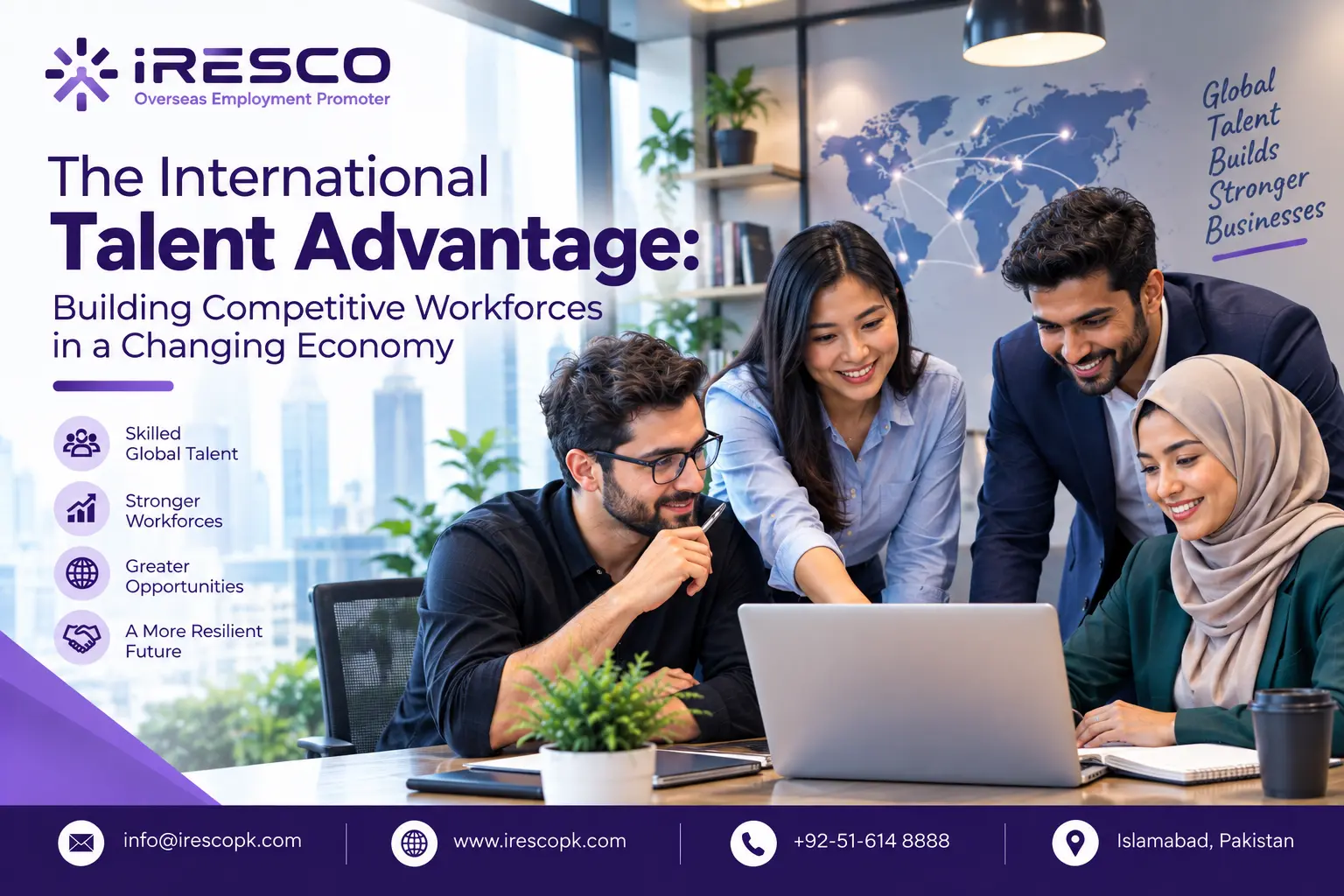
Workforce resilience means having the capacity to respond to changing business conditions. Economic uncertainty, technological disruption, changing customer requirements, and skills shortages can all affect workforce planning. Organizations with flexible talent strategies may be better positioned to adjust when circumstances change.
An international workforce can provide additional flexibility by giving employers access to skills across different labor markets.
However, resilience depends on more than recruitment. Businesses should also invest in:
- Employee development
- Knowledge sharing
- Leadership development
- Workforce planning
- Digital skills
- Cross-cultural communication
- Succession planning
A resilient workforce is continuously developed rather than created through recruitment alone.
How Employers Can Build an Effective International Talent Strategy
Companies considering international recruitment should begin with a clear workforce plan.
1. Identify Skills Gaps
Determine which positions are difficult to fill and what skills are missing from the current workforce.
2. Define Candidate Requirements
Create clear job descriptions that explain qualifications, experience, technical abilities, language requirements, and other relevant criteria.
3. Identify Suitable Talent Markets
Research international labor markets where the required skills and professional experience are available.
4. Establish a Structured Screening Process
Use consistent criteria to evaluate candidates and ensure that recruitment decisions are based on job requirements.
5. Understand Employment Requirements
International hiring may involve immigration, employment, documentation, contractual, and regulatory considerations. Employers should ensure that the relevant requirements are properly addressed.
6. Prepare for Onboarding
International employees may need additional support when joining a new organization or relocating to another country. A structured onboarding program can help them understand company policies, responsibilities, workplace culture, and expectations.
7. Invest in Retention
Recruiting international professionals is only part of the process. Employers should also focus on career development, workplace inclusion, compensation structures, professional recognition, and long-term employee engagement.
The Future of International Workforce Solutions
The future of work is likely to remain highly connected. Businesses will continue to use technology to collaborate across borders, while skills requirements will continue to evolve.
Organizations that develop flexible international workforce solutions can adapt their recruitment strategies as new skills and markets emerge.
The focus is also shifting from simply filling vacancies to building long-term talent ecosystems. Employers increasingly need to understand which capabilities will be important in the future and how those capabilities can be developed or sourced.
This makes strategic workforce planning increasingly important. The international talent model can therefore become part of a broader approach that combines global talent acquisition, employee development, workforce diversity, skills development, and digital transformation.
Why Global Talent Matters in a Changing Economy
Economic change creates both challenges and opportunities for employers. Companies may face new competitors, emerging technologies, changing customer behavior, and evolving skill requirements.
A workforce capable of adapting to these changes can help organizations respond more effectively. International talent can contribute by expanding access to specialized skills, professional experience, and diverse perspectives. When combined with effective workforce planning and responsible recruitment practices, global talent can become an important component of organizational development.
The key is not simply hiring internationally. The goal is to identify the right skills, establish appropriate recruitment processes, support employees effectively, and create an environment where talent can contribute over the long term.
Conclusion
The international talent advantage is becoming increasingly relevant as businesses operate in a rapidly changing global economy. Access to international professionals can expand the talent pool, help address skills shortages, support workforce diversity, and provide organizations with capabilities needed for growth and innovation.
However, successful international recruitment requires more than finding candidates in other countries. Employers need structured global talent acquisition strategies, effective candidate screening, clear workforce planning, appropriate compliance processes, and strong employee support.
Organizations that combine international recruitment with local development, upskilling, technology, and inclusive workplace practices can build workforces prepared for changing economic conditions.
As the future of work becomes increasingly interconnected, global talent, skilled workers, international recruitment, and workforce development will remain important elements of modern business strategy.
Frequently Asked Questions (FAQs)
1. What is the international talent advantage?
The international talent advantage is the ability of businesses to access skilled professionals from different countries and labor markets. It can expand the available talent pool and provide organizations with specialized skills, international experience, and diverse professional perspectives.
2. Why is international recruitment important for businesses?
International recruitment can help employers access candidates beyond their local labor market. It can be particularly useful when organizations face skills shortages or require specialized technical and professional expertise.
3. How can global talent help address skills shortages?
Global talent acquisition allows employers to search across multiple labor markets for professionals with specific qualifications and experience. It can complement local recruitment, employee training, upskilling, and other workforce development initiatives.
4. What should employers consider when hiring international workers?
Employers should consider job requirements, candidate qualifications, professional experience, screening procedures, employment regulations, documentation, onboarding, workplace integration, and long-term employee development when recruiting internationally.
5. How can companies build a competitive international workforce?
Companies can build a competitive international workforce by identifying skills gaps, defining clear candidate requirements, accessing suitable international talent pools, using structured candidate screening, supporting effective onboarding, investing in employee development, and creating inclusive workplace environments.
